9/1: After leaving Sarajevo in the afternoon, we took the bus along one of the most spectacular drives we've ever been on to Mostar, in the southern Herzegovina region of Bosnia and Herzegovina and known as BiH. The road hugged the rugged mountainous cliffs as it journeyed in and out of tunnels by the emerald green river for mile after mile, hour after hour. On bus trips, I normally am glued to the laptop and use every precious moment to type up notes for a blog post before the battery dies on me. On this drive though, I found myself looking up frequently to gaze in wonder at the stunning views.
It was great having a family member from Hostel Nina greet us at the bus station when we arrived at 7 pm.
Our hostel room:
The room seemed so ideal initially and for the most part it was. Weird things though: The double bed had one twin top sheet only and no blanket or throw and, since there were no hooks, the pictures became our towl hooks!
After leaving our bags in our room which had a shared shower in the hallway, we walked a few blocks toward the center of town to get a bite to eat in the old bazaar. On the way, it was impossible to miss the ravages of war that had so affected Mostar in the 1990s.
Mostar means 'bridge-keeper' and the crossing of the Neretva River here has always been its reason for being. In the mid-16th century, Mostar became a key transport gateway within the powerful expanding Ottoman Empire. In 1566, a swooping stone arch was built to replace a suspension bridge whose wobbling had previously terrified tradesmen as they gingerly crossed the fast flowing river. It survived the Italian occupation of WWII but, after standing for 427 years, the bridge was destroyed in November of 1993 by Bosnian Croat artillery.
By 1995 Mostar resembled Dresden after WWII with all of its bridges destroyed and all but one of its 27 Ottoman-era mosques utterly ruined. Vast international aid rebuilt almost all of the UNESCO-listed old city core including the classic bridge called Stari Most or Old Bridge which was painstakingly reconstructed using 16th century style building techniques and stone from the nearby original quarry.
It's that world famous bridge that gives Mostar its special focus and drew us like a magnet. That first night though, we decided to simply admire it from the narrow, cobblestoned Kujundzilik or Gold Alley where goldsmiths had once toiled.
We got a bite to eat at one of the many restaurants and bars that line the alley before returning to the hostel as we had a full day trip lined up the next day.
Some views of Mostar at night:
Gotta love those cobblestones that went on for block after block!
Mostar's iconic Stari Most:
9/2: Hostel Nina served a lovely breakfast of a plain omelet,
bread and lemonade each morning which was a welcome surprise as we hadn’t been
expecting it. We talked to one young woman from Brampton, Canada, who had been traveling alone for eleven and a half months and wasn’t planning to return home
until Christmastime. I think Steven and I are pretty adventurous by many
standards but neither of us could imagine doing that. She said one of her
favorite places had been her tour of Chornobyl where we had been just recently
too.
I had planned the tour many months ago that would take us to a number of places around Mostar in Herzegovina.
I will refer to our driver and guide for today’s tour as ‘Tariq,’ which is the
most popular boy’s name in BiH as I was told later that he didn’t want his name
or photo used in the blog. He expressed concern at the end of the tour about possible
ramifications later of what I wrote about him and his experiences in the war in
such a small community as Mostar. I told him I would honor his request.
As Tariq drove us and the other tourists to the nearby village of Blagaj, home to a
Dervish house from the 16th century, he talked about Mostar and the rest of the
former Yugoslavia. There are three ethnic groups in Mostar: Bosnian Croats,
Bosnian Serbians and Bosniaks. Three
presidents rule BiH with each one taking turns for a few months at a time. Tariq
said all three must agree on all decisions. There are elections every four
years but there are no term limits. One of the presidents has been in office
for 11 years. There are 30 plus political parties and lots of problems with
corruption in BiH. Tariq joked that every country has the Mafia but here the
Mafia has its country! What a sad commentary. He talked about difficult the transition has been from
communism to capitalism for many people, especially the older residents. Tariq
talked, too, about the Roma or gypsy people who ‘live on wheels and don’t want any
identification.’
Tariq talked about Stari Most, Mostar's famous bridge. He mentioned that, if we waited long enough, we would see someone jump off the bridge. The bridge jumpers, he joked in a macabre way, have a short life because the bridge is 26 meters
high and the icy Nerevta River is only 5-6 meters deep in that spot!
I remarked on the divisions that still exist in Sarajevo
today. Mostar seemingly is no different; there are again two bus stations but
also two soccer teams, two fire departments, two postal systems and two universities, one Bosniak and one Croat, Tariq told us. According to what I
understood him to say, there is only one (high?) school and it has a morning
shift for kids from the east side of Mostar and the afternoon shift for those
from the west side. Different history classes are taught for each of those ethnic groups. Is it any wonder the town of Mostar and the country of Bosnia and Herzegovina are still so divided?
The small village of Blagaj was our first stop. Human remains have been found here dating back 12,000 years. The caves above the village have long protected human settlements.
Atop the high cliffs is the fortress of Herzeg Stjepan who ruled present-day Herzegovina in the Middle Ages.
One of the most mystical destinations in all of Herzegovina is the Dervish tekke or house that was ordered built by the sultan when the Ottomans arrived in the area in the 1500s. It was constructed at the source of the River Buna, one of the largest water souces in Europe and bigger even than the Danube.
Traiq said we could drink the water here as it is so clean because it is spring fed. I didn’t see anyone taking him up on his suggestion though!
While here in Blagaj, we had a couple of options,Tariq said: We could tour the Dervish House or take a short boat ride into the cave. Whatever we chose, he said, we’d better show up at 11:30 to leave as he had our money and therefore would depart without us!
We've been in lots of caves but sure can't say we'd been in a Dervish home so that was an easy decision!
The Dress Code: Since we were entering a place of worship, we had to observe the dress code.
This lovely woman at the entrance to the tekke helped me make sure the skirt and headscarf that were provided were tied on properly.
Photos of the home: As the tekke is a Muslim place of
worship, there are never any paintings on the walls, Tariq had mentioned, only
calligraphy.
The Reyyah or reception room where coffee is served. Poor Steven didn't get his coffee here but he did relax for all of one minute!
The house tour was self guiding which worked well given our limited timeframe! There was some intereting woodwork and well preserved old-style sitting and prayer rooms.
This room had been converted into a tomb with
the bodies of two dervishes. That is why religious pilgrims come to visit
Blacaj, Tariq had told us.
What a stunning view of the emerald green Buna River from the home:
This was the first time we had noticed a green flag like this. It was the same as the Turkish flag but green rather than red. (We noticed it many times later in mosques in Croatia.)

After touring the home and making sure we returned to the
meeting spot in time, Tariq drove us to a spot located behind a partially closed gate that was supposed to be off limits to everyone. It was a large underground military base. He explained that Yugoslavia
had been the most developed country in Eastern Europe
after WWII and that period was considered to be the country’s Golden Age. There
was 0% unemployment due mostly to the buildup of the nation’s military. Mostar
was an important town in the defense of the nation because of its location.
There were five military bases in the south of the country, one at least around
Mostar.
Prior to the Balkan war of the 1990s, Mostar had
been a thriving town with five large factories. One of them was allegedly
making wheels for Mercedes-Benz cars but was really making fighter planes, Tariq said. Mostar residents were unaware about the tunnel where the planes from the
nearby base could be evacuated to in the event of a nuclear war.

Rocks at the entrance to the tunnel were painted with
camouflage colors.
The ‘rocks’ on the ground were actually just pieces of Styrofoam to disguise the importance of the tunnel!
The tunnel had been supplied with AC and enough food and
supplies for people to last for six months, Tariq said, behind the blast proof
doors. It was very odd walking around a relic from the Cold War. Because this place was theoretically off limits, it wasn't designed for tourists so we had to be very mindful where we walked because it was pitch black and there was all sorts of pretty dangerous debris throughout every room. Zachary: I am sure you would have enjoyed this part of our tour but I didn't care for it much.


We drove next to Pocitelj which was designed as a rest stop
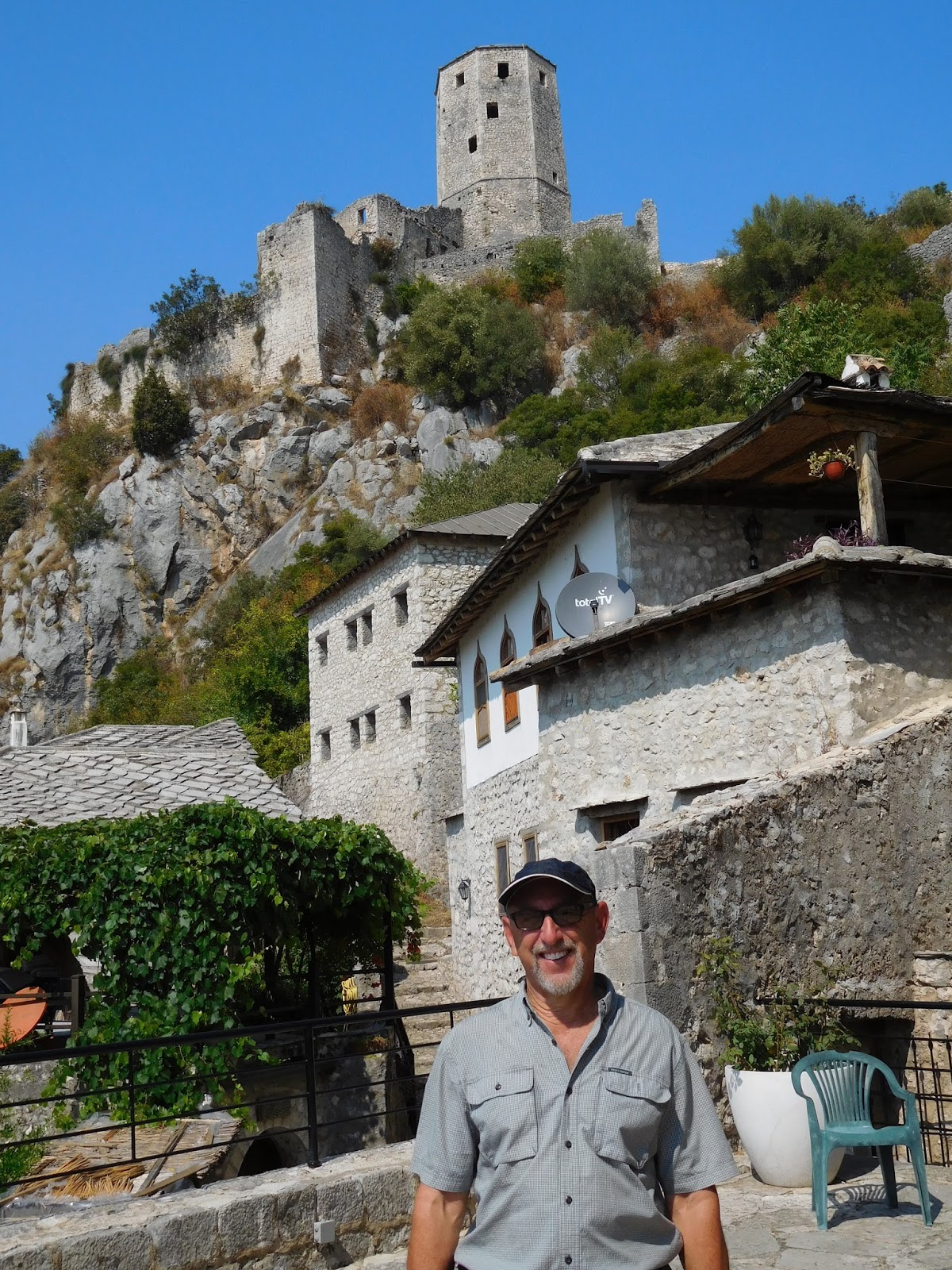
along the way in ancient times. The fortress at the top of the hill is being reconstructed. The old
mosque was destroyed in the 90s war. Also destroyed during that time were more
than 1,000 monuments in BiH, a term he referred to as urbicide which I had not
heard of before.
Tariq mentioned that prior to the war, the population of the
village was more than a thousand but now only 100 remain. Most of the
homeowners are now living in St. Louis
and Jackson, Mississippi and only come back in the summertime.
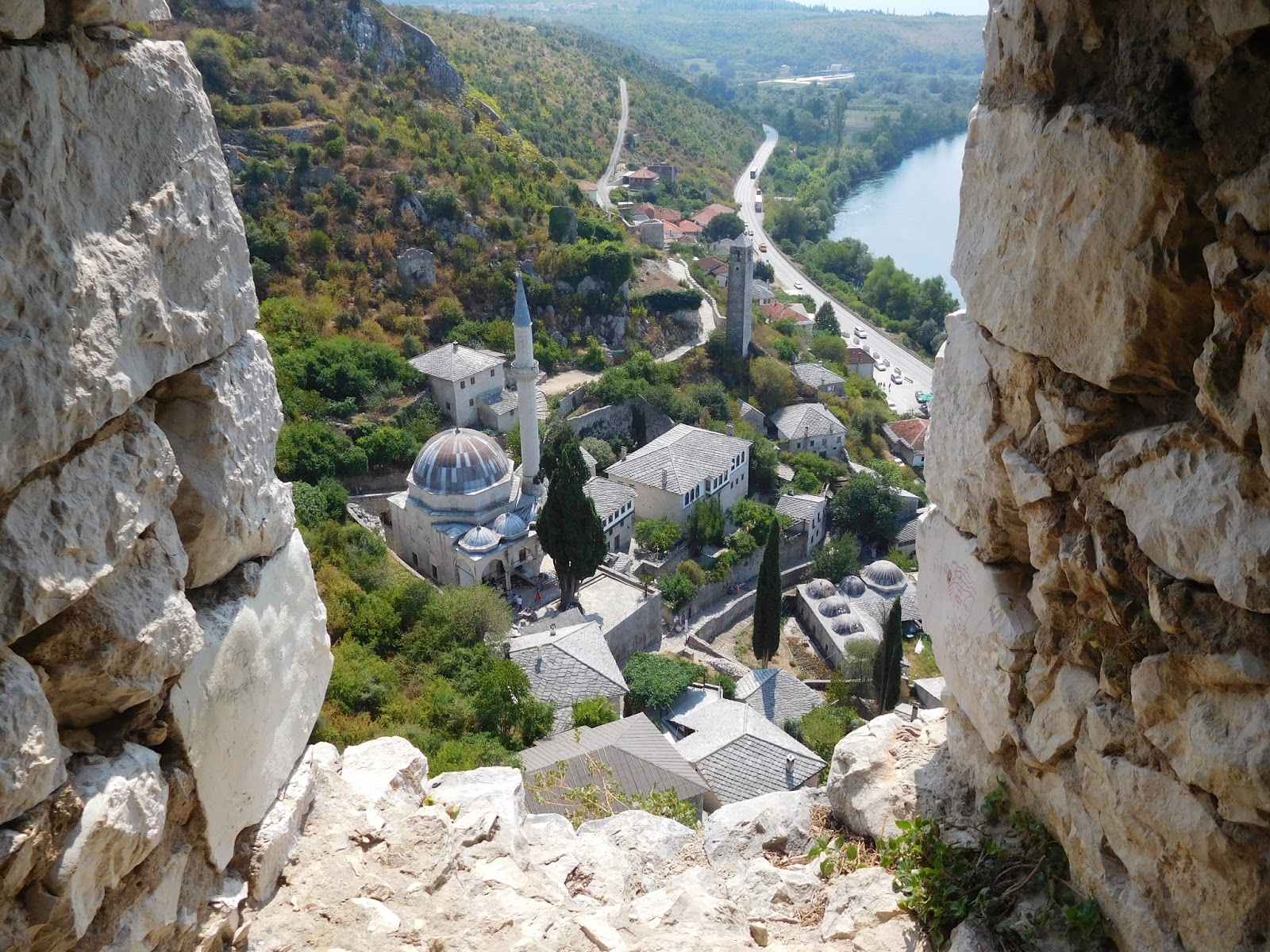
Views of Pocitelj: We climbed to the top of the fortress for some stunning views
of the surrounding area.
There were some very refreshing breezes at the top which
were so welcoming as it had been quite hot hiking up all that way.
After what seemed like a long time hiking up the long hill and then the tower itself, we reached the top. The views were stellar as you can see for yourself.
As we descended from the fortress, we heard the call to
prayer from the muezzin at the nearby mosque.
We climbed to the top of the fortress next for more dramatic views.


Seeing the dark gray stone roofs in every direction was so appealing.
A close up view of the mosque we had only seen before from the tower:
And a view of the tower from the mosque:
The next stop was Kravice
National Park and its beautiful
waterfalls which was the biggest lure for most of the people on the tour who
were looking forward to spending a few hours relaxing in the sun. When we had
booked the tour months ago, it had included a one hour stop in Medugorje, a
famous pilgrimage site for Catholics which was more the lure for me especially.
In the interim between booking the tour and being on the tour though, we
discovered that the tour no longer went to Medugorje!
Some background about Medugorje: On June 24th, 1981 a vision appeared to six teenagers. They believed they saw a manifestation of the Holy Virgin. As a result, this formerly desperately poor wine-making village has been utterly transformed into a bustling Catholic pilgrimage center and continues to grown even though the Vatican has not officially acknowledged the visions' legitimacy.
Luckily, Tariq realized how important it was to us that we
go as planned so he dropped off most people at the falls and drove us to Medugorje which wasn't far away. It was interesting to hear his views as he expressed skepticism about what the six teenagers
had experienced based on their ages at the time. He pointed out, too, that it was curious that it happened in 1981 just months after the death of Tito, the communist leader, as religion was suppressed under Tito. Tariq mentioned that five of the six teenagers still live in the area and the other is in St. Louis.
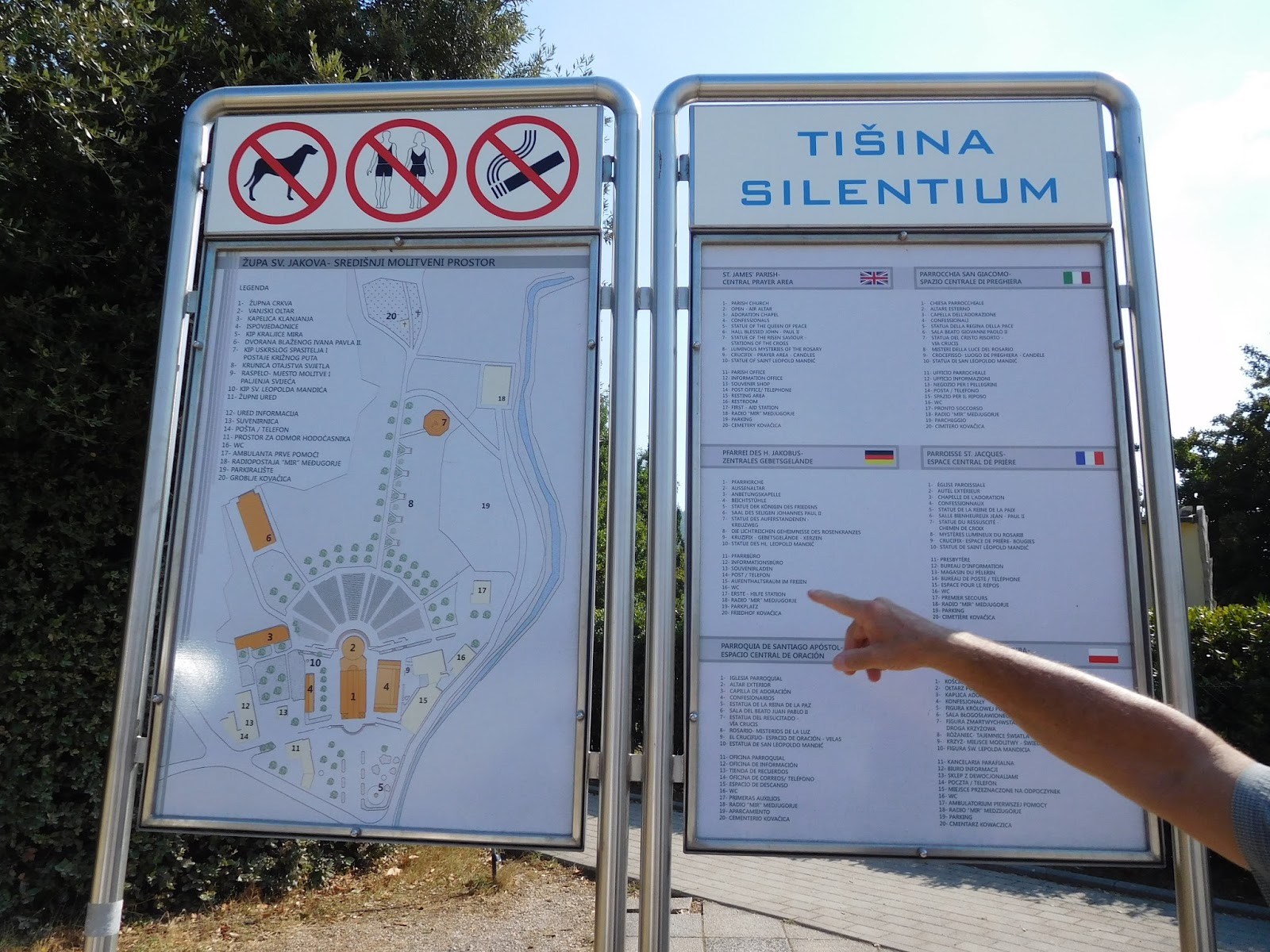
It was somewhat disheartening to approach Medugorje and discover for ourselves what is now a mammoth tourist
mecca drawing the faithful from all over the world as it is now the second-largest Catholic pilgrimage site in the world. It has the best tourism infrastructure in the country with excellent restaurants, accommodation ranging all the way up to five stars, travel agencies etc. The main street is nothing more than one long souvenir-shop bazaar. Every few feet, we saw shops selling crosses, rosaries, statues, pictures, jewelry - you name it. I found it tough, I must admit, thinking of the mega millions that have been earned from tourists flocking there and wondering whose pockets have been lined with all that infusion of money. But, did all that want me to ask that we turn around and leave? No, of course not. But i wish I had prepared myself for what to expect.
We only had a scant 35 minutes to scurry from the parking
lot to the lovely cross where faithful were lined up to touch Jesus’ right
knee, to walk quickly by the Stations of the Cross and enter the church and say
a few prayers before beetling back to the parking lot to meet Tariq. It wasn’t
enough time to do it justice and soak up the religious zeal experienced by
others but at least we were able to say we had stopped and for that we were very thankful.
The Resurrected Saviour: The first thing we saw was a contemporary sculpture of a 15 foot tall metallic Christ that stood crucified but crossless in a garden near the large open air amphitheater. There was a small and respectful crowd who waited patiently in line to touch the statue's right knee which sometimes 'miraculously' weeps a colorless liquid that pilgrims dabbed on specially marked pads.
The entrance to the large amphitheater:
The 'jumbotron':
Medugorje's original small church has been torn down and replaced by a larger one called St. James.
Compared to how tacky and utterly commercialized I found the town, St. James' was surprsing in its quiet elegance and simplicity. A few precious moments there helped bolster my faith.
On the way back to Kravice Falls where the rest of the tour group was, I asked Tariq about these signs. He said the Cyrillic writing on had been intentionally marked out
with black paint by the Bosnian Serbs who were anti Bosniaks who were Muslim.
We had less than an hour back at Kravice Waterfalls to
swim in the freezing cold water and relax for a bit after being on the go all day. I can’t recall being in water that frigid. It
literally took my breath away and I had to get out right away before gingerly
going in again. My father would have loved that bracing swim!
Never have we seen a sign before forbidding the performing of religious rites:
Tariq had pointed out that the Serbian Croat business owners
at the falls derive so much money from all the tourists from Mostar who come to
enjoy them. However, they only display Croatian flags, i.e. the flag from the
neighboring country, and pee on the BiH flag as a sign of disrespect. They fail
to serve Bosnian beer at the busy restaurant by the falls too, only Croatian,
German, etc. People in this area of BiH have Croatian passports even though
they live in Bosnia.
They all support the Croatian economy, the Croatian football team, etc. Wow - what a divided country.
I saw a passenger in the car below waving a huge flag and asked
Tariq about it. He said it had been a Croatian flag from WWII.
We got back to the hostel about 5:30, earlier than we had
thought we would. We were glad to relax a bit as the hostel had an evening walk
planned that we decided to join. We hadn’t done our due diligence and checked
out in advance what it entailed as we normally do which turned out to be far
more exciting in the end.
Our early evening walk/tour through town:
One of the city buses that had been donated by Japan:
As we walked for about 30 minutes through the darkening
streets of Mostar, I couldn’t help but notice more war-ravaged buildings.
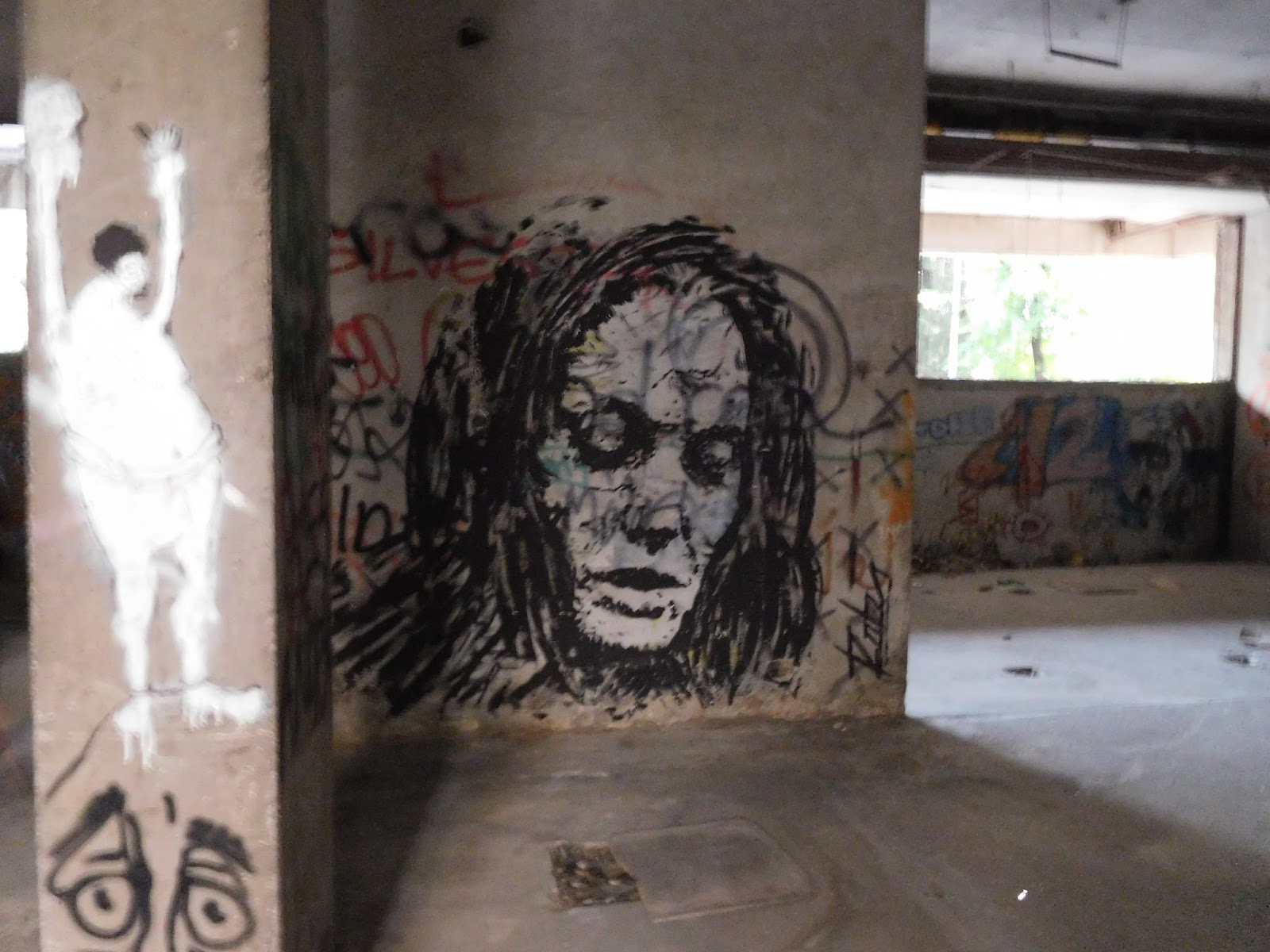
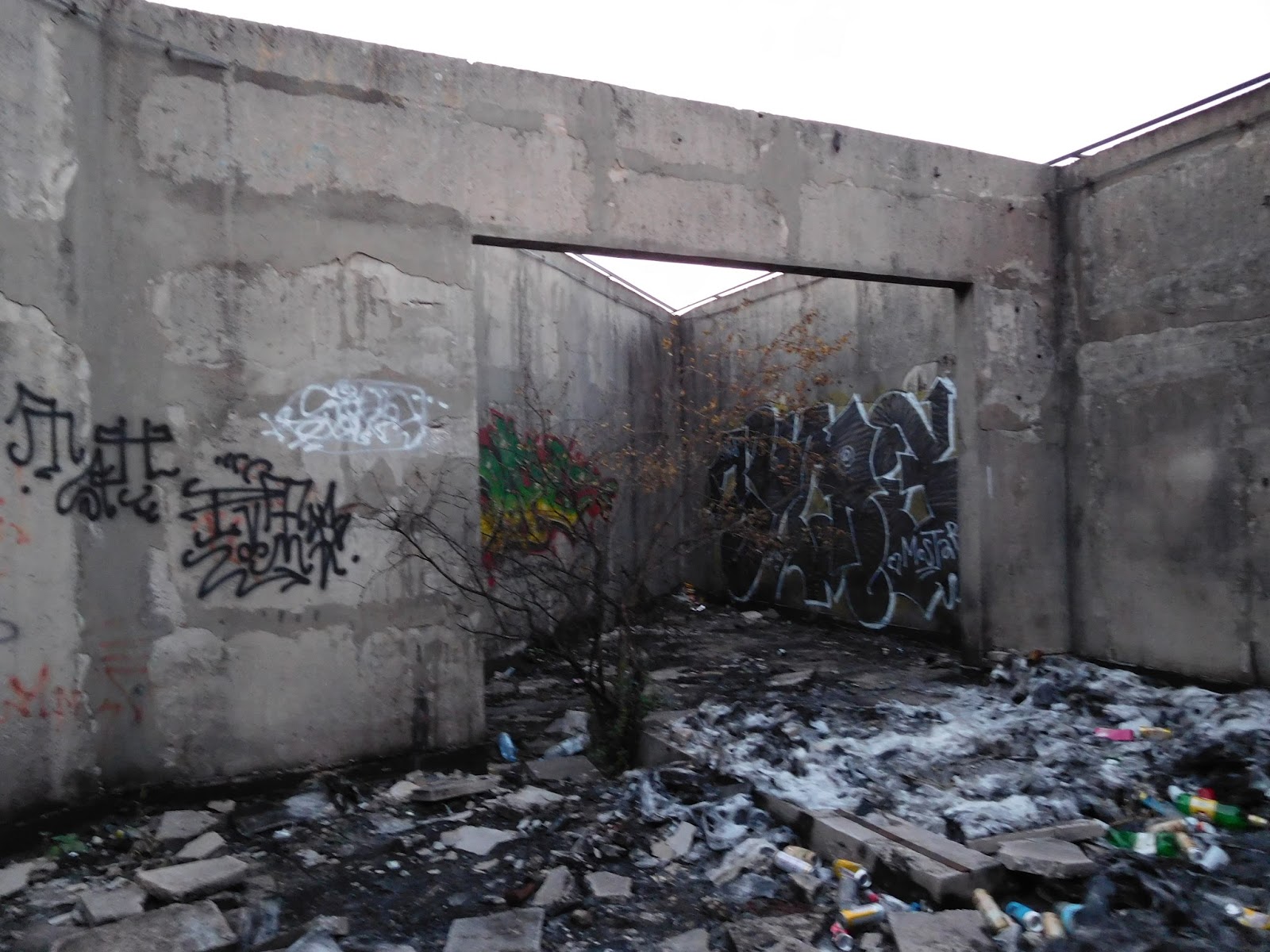
The street art or graffiti was also especially compelling. I always wonder what separates the two. Is it simply in the eye of the beholder?
More than two decades after the war, many buildings remain as bullet-pocket skeltal wrecks, especially along Mostar's former 'front line'. Our guide took us to one area which was also known as
Snipers’ Alley and led us to our destination for the evening. It was this triangular nine floor
tower which had been a bank famous for all its glass.
Steven and I had NO idea until we were actually right there that we were all going to be climbing to the top of that wreck which should have been torn down years ago. At that point though, it was a case of in for a penny, in for a pound and there was no easy way of turning back.
I was so glad that I was helped over the wall and that I was wearing a skort and not a skirt right here because enough skin was already showing!
Photos of the craziest thing I've ever done!
Looking at these pictures over a week later now still gives me chills.
I am so glad there was a narrow red line that
had been spray painted on the middle of the steps as we climbed up, floor after
floor. I am not wild about heights, to put it mildly, so going up flight after
flight of stairs was decidedly nerve wracking.
Plus, the prospect of having to go down a little later as
the sun was setting was even more frightening. Thank God, Natalie, Dad had the flashlight you gave him last Hannukah. That has come in handy a number of times already this trip.
The gun turret near the top:
Prior to the war, the building had been famous for all its glass.
A sign of life amid such destruction:
Once we climbed up here, we'd finally reach the roof of the building.
Views of Mostar from the roof:
The street between the white building and the orange building below divides (ed?) the city between the Muslims and the
Bosniaks. The orange building is the Muslim school.
It wasn't until we were up on the roof that we were told it was illegal to come up here and, in hindsight, no doubt damn stupid too, I might add. We sure hadn’t had to sign any waivers before
starting out tonight. Now I see why! Our ‘guide’ for the night mentioned that
others come up just to chill and smoke dope which is even more illegal, he joked.
Seeing crosses at the tops of hills are common in the Italian countryside but the one here is viewed by many as a very provocative landmark. During the war, from the exact spot where the over 110 foot high cross was erected, the Croatian forces pummelled east Mostar with artillery and anti-aircraft fire. Because of the no-fly zone enforced by NATO during the war, there were no planes to fly at so the anti-aircraft weapons were fired at civilians. That is why the cross is a painful reminder to many citizens of Mostar of not only the brutal war but also the deep rifts between the ethnic groups today.
The Bosniak mountainous area:

Going down was no easy feat either as the rungs seemed way too far apart and I couldn't rest at the metal piece behind me as that was too far too.
There was certainly an adrenaline rush but that dissipated quickly enough once we were on terra firma, let me tell you! We have had lots of adventures on these long trips but that had to be the be all and end all!
We all walked back through Old
Town on the opposite side of the Nerevta
River and crossed Stari Most for
the first time.
The rest of the group had stopped off at a local restaurant and bar
but we found another place to grab a quick bite as it was about 8:30 by then and we had had nothing but
crackers and an apple each to munch on all day long. The doners we got tasted
delicious but I think, anything would have by then as we so hungry.
I just went to bed that night hoping I wouldn't have nightmares of climbing that building over and over again!
Posted from Kotor, Montenegro on September 12th, 2016.


 Wish we could have seen this entire restaurant rooftop sign:
 Going down was way worse than going up, especially when we met people going up at the same time.


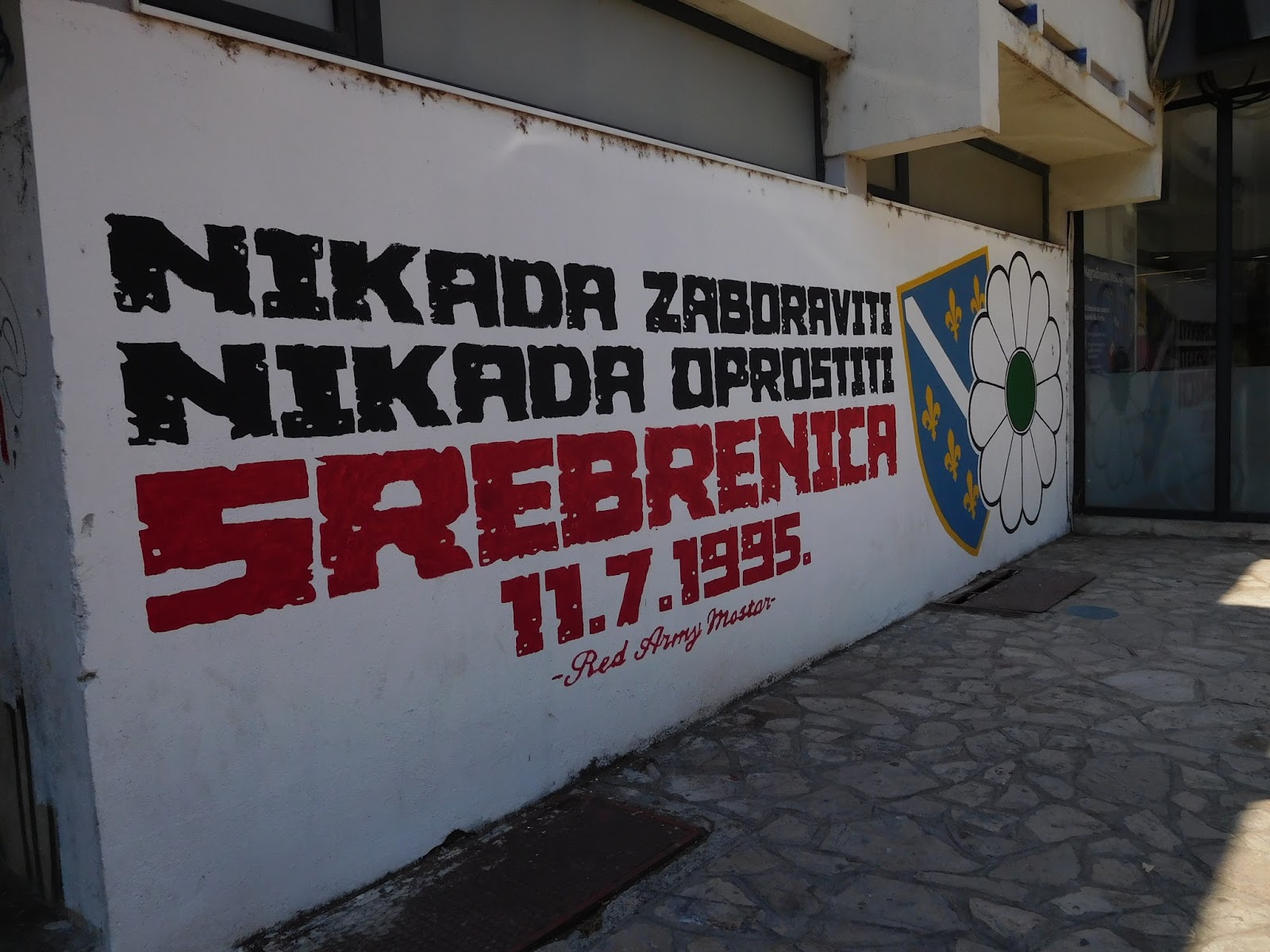
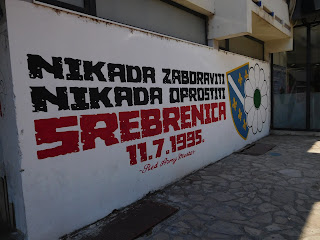
 Poster reminding people to remember the horrific events that took place in Srbrenice on 11/7/95 in which thousands of Muslims were slaughtered by the Serbians.
 The Bosnian and Herzegovina flag (or at least most of it!):


 The 'altar' with steps is for the Muslim cleric to lead prayers or address his congregation. Islam, however, does not follow sermon-type worship. It was unusual for us seeing the green flag like this in
mosques in the former Yugoslav countries but he said they were common here. Again,
Steven and I were struck how incredibly kind and welcoming the man at the
mosque was. The difference between the welcome we get at mosques and from other
religious places of worship has been striking.
 Manuscript of the Holy Qur'an aka Koran from the 16th century:


 The street looked so peaceful now of course and had a few stores and restaurants open.


 We saw the building again we had climbed last night and wondered anew at our sanity for having done so!

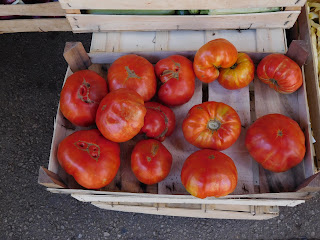
 There are lots of small mom and pop style grocery stores all over Mostar and indeed over much of the Balkans. These were among the biggest tomatoes I had ever seen!
 Again, I ask the question: graffiti or art?
 A photo of the entire BiH flag!

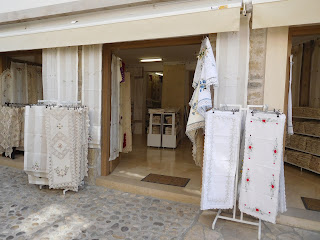


 The area around Old Town and the Crooked Bridge was so incredibly charming and seemed a million miles away from the bombed out areas we had just walked through less than half an hour ago.

 Photo of one of the towers overlooking Stari Most:

 Walking across the bridge on these marble steps was interesting and tough!