Many of you who have read our blogs in past years know of our love for farmers' markets all over the world. That is why we made our way first thing over to Riga’s
Central Market which is comprised of five 66ft high Zeppelin hangars
built by the Germans in southwestern Latvia
in WW1 and brought to Riga in the
1920’s to house the market. It is thought to be one of Europe’s
largest markets as it has more than 3,000 vendors and 75,000 people passing
through daily!
Each hangar has its own specialty: meat, dairy products, produce,
seafood and …I didn’t find out what the last one was! I greatly admired all the many vendors' exquisitely hand knitted socks as I love to knit but, unlike my mother and my friend, Darlene, that is not a talent I've acquired.
Latvian cuisine takes its history from both Germany
and Russia as
those nations had the greatest impact on the country. Fish is the most
traditional cuisine as it can be smoked and salted to last an entire winter.
Who knew that Latvians are the third largest per capita consumers of potatoes
after only Ireland
and Belarus?
The most consumed beverages, we learned on the walking tour, are vodka and
beer.
It was very refreshing walking out into the fresh air after smelling the very intense smoked fish and seafood odors. I sometimes wonder what my fellow students must have thought of me when I worked every Wednesday during my third year of university for a full year at a seafood store in Ottawa and then took an evening American Colonial History class. I imagine I smelled as ripe too!
Inhaling the lovely scents from the wide array of flowers was indeed a welcome relief! Many of the flowers were, to us, very cheap - only two or three dollars.
There were hundreds of vendors
selling their wares in stalls surrounding each of the hangars too. What a
scream seeing Nathan's Coney Island hot dog truck here in Riga as we had seen the 'real thing' in Coney Island
just a few months ago as we drove up the coast from Florida to NY and onto Canada!
Located a stone’s throw from the market was the Spikeri or
Creative Quarter by the shores of the Daugava
River. Regular art exhibitions,
music concerts are hosted in the beautifully renovated storage buildings before
the port was relocated.
Steven and I couldn’t resist looking at, and admiring, this
intriguing netted playground structure after all the planning and installation
of a new playground in our neighborhood just days before we left Denver.
Kathy: Bet you would have like it as much as we did!
Just a block away is all what’s left of the city’s once
vibrant Jewish Quarter. Before WW11, Jews comprised between 8% and 10% of the
city’s population, or about 60,000 to 70,000 people. After the war, there were
only 200-300 Jews left. The deportations were begun by the Russians, Latvia’s
occupier at the time. If anyone expressed any anti-Russian views, they were
deported to Siberian camps immediately. It was no wonder, then, that the
Germans were welcomed by the Latvians because they were seen as they couldn’t
be any worse than the Russians. How sad that such comparisons between two such evil regimes were made and that the Germans came out the 'winner.'
As we toured the Riga Ghetto and Latvian Holocaust Museum
that had only opened in September of 2010, we learned that there had been more
than 200 synagogues and prayer houses in Latvia, most of which were built prior
to WW1.
Riga Ghetto
House: This two-story wooden house was built in the middle of the 19th century
in the Moscow suburb where the Riga
Ghetto was located during WW11. It was moved in 2011 to the Museum in 2011
where it was renovated. More than 30 people lived in this 1,000 square foot
home!
This room, which comprised the entire main floor, had models of 21 Latvian synagogues.
In front of the house was a square with Jewish
symbols, Hebrew alphabet letters and the memorial sculpture, Tree of Hope,
dedicated to Latvian rescuers of Jews.
The fence and gates, below, were made in the same way as they looked
during the Nazi occupation. I didn’t realize til later that the cobblestones we
walked on had been brought to the Museum from one of the main streets of the
Riga Ghetto. The Memorial Wall contains more than 70,000 names of Latvian Jews
who perished in the Holocaust.
The photo below shows a railroad track laid by the Germans to transport fuel to a site in Bikernikei Forest where the Nazis burned their victims' corpses to erase the vidence of their crimes before fleeing the city.
The exhibition ‘Berlin-Riga One Way Ticket’ was installed in
a railway transportation car similar to the ones used to send thousands of
Jews from Nazi Germany to Riga to
almost certain death.
25,000 Jews were deported to Riga
from all over Western Europe before being exterminated.
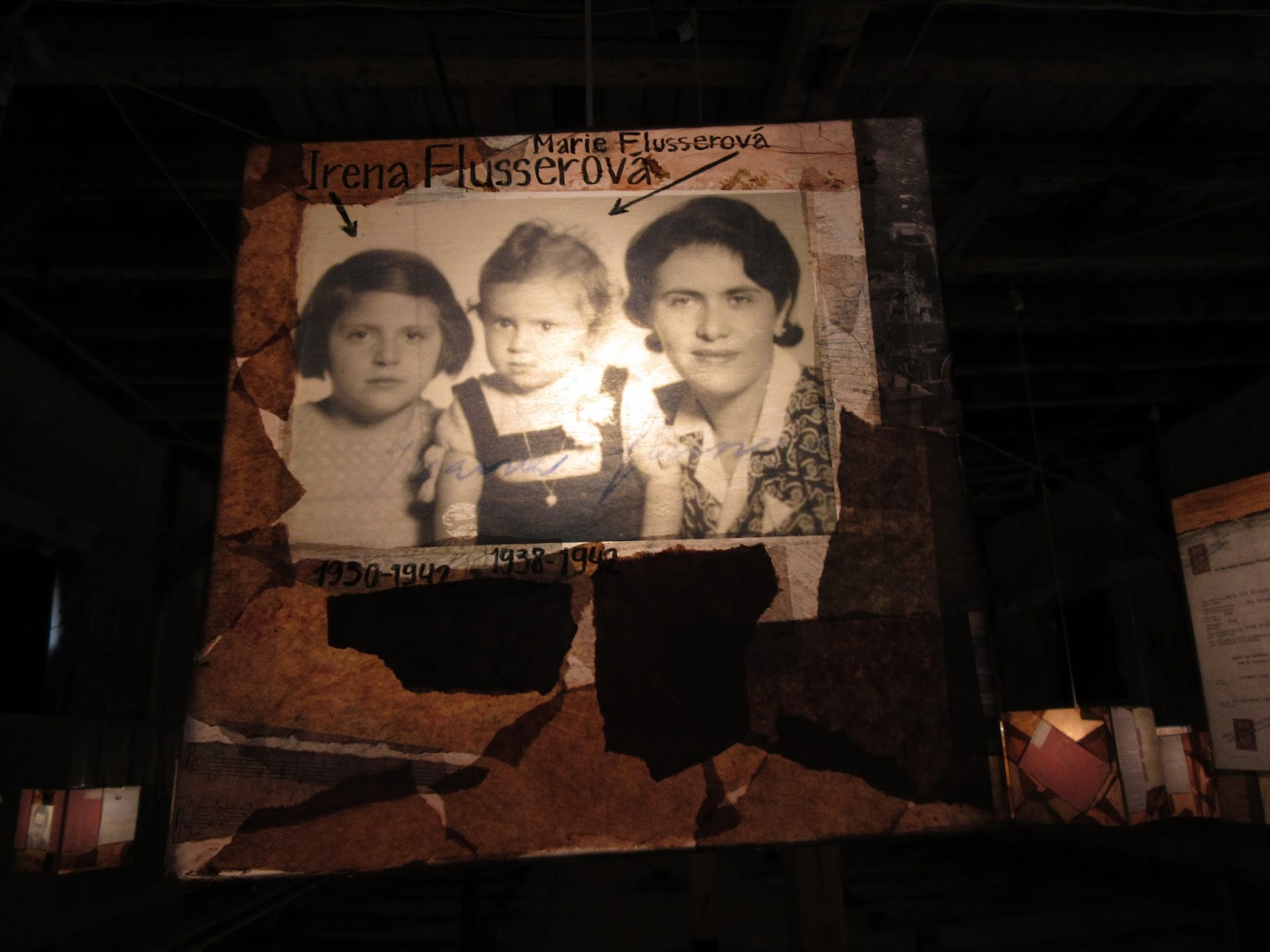
In one of the most heartrending sights of Jewish life during Hitler’s reign of
terror we have ever witnessed, one large room had a display of some of the
murdered Jews’ photos and documents affixed to lampshades while haunting music
played gently in the background.
One was the story of Dadaism founder Walter Serner below.
On the edge of the Central Market and the Museum is the Moscow District known
locally as ‘Little Moscow’ and is where ethnic Russians have lived for centuries. The
area was a vibrant center for Jewish life in Riga
until that was extinguished by the Nazis.
We hadn’t seen so many19th century wooden houses like these
ones since we had visited two cities in Siberia back in
2013 when we traveled across Russia
on the Trans Siberian train. It was sad to see that the dilapidated buildings
have yet to benefit from Riga’s
growing prosperity.
In the middle of the District, was the Empire State building replica (below on the right) that belonged to the Academy of Sciences. Our walking tour guide had joked the day before that since
Riga is the biggest manufacturer of drugs in Eastern Europe, Latvians were not
at all surprised that Russian tennis star Maria Sharapova had recently been
banned from playing the game after using Latvian performance enhancing drugs! By the time Latvians finish high school, they normally are
pretty fluent in four languages: Latvian, English, Russian and either German or
French. Wouldn't it be great if American students, by contrast, had to have a passing
knowledge at least of Spanish before graduation?
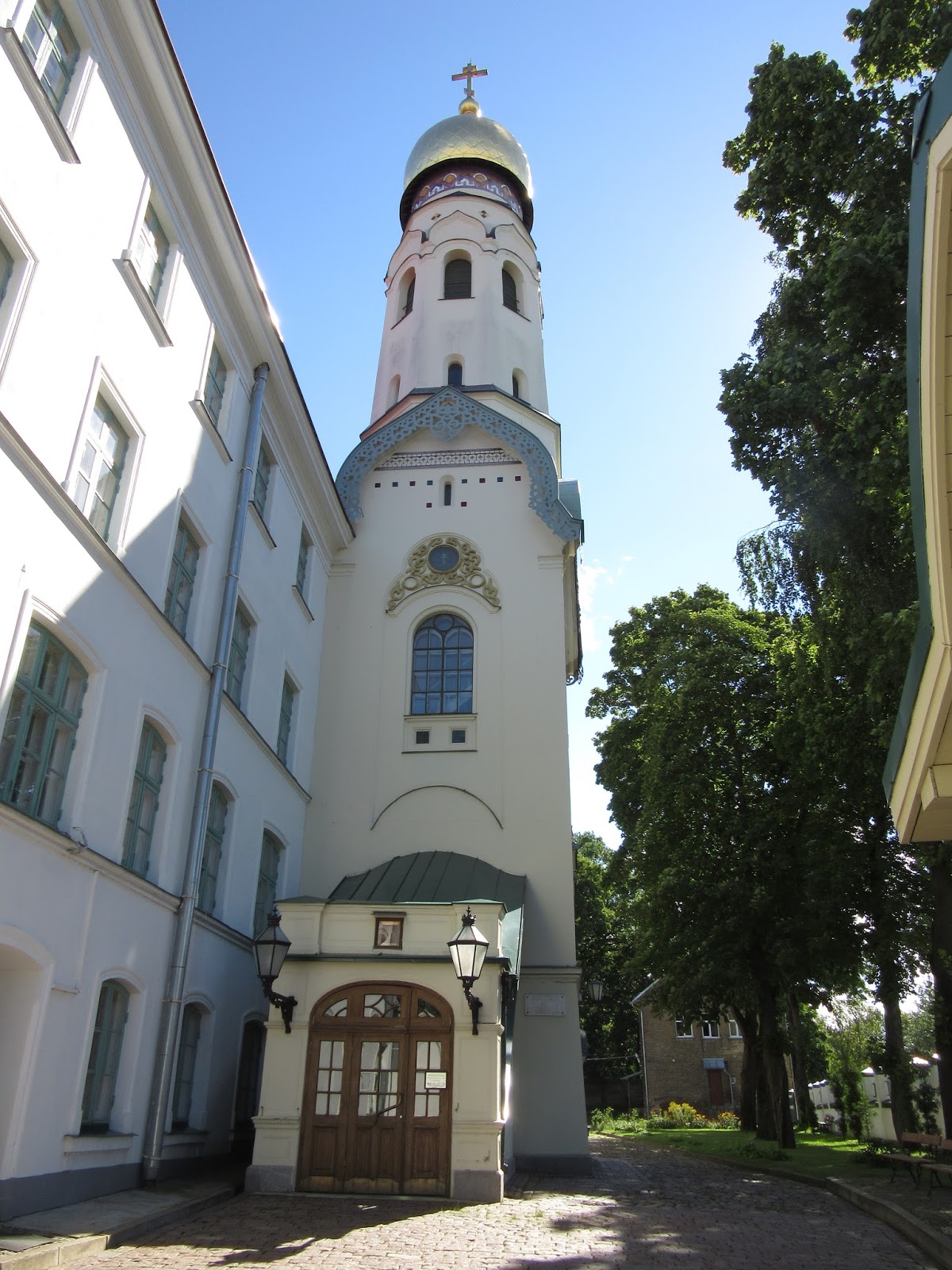
We decided to be a tad adventurous next and got the tram to the
place of worship for the city’s Old Believers which was further out in the
Moscow District. Old Believers settled in Riga
after fleeing religious persecution in Russia in the late 17th century.
The church now has the largest parish of the faith in the world, with a congregation of 25,000. I had so looked forward to seeing the church even though it is not well known and even the city’s Tourist Information staff was barely aware of its existence. You can therefore imagine my profound disappointment when we had schlepped quite a ways out for me only to discover that, according to the Russian-speaking guard when he pointed to the sign on his window, pants were not considered proper attire for a woman to be wearing to visit the church. I even had worn my headscarf since head coverings are normally mandatory for women in East European churches even though mine happened to be one I picked up in Haifa, Israel in 2014. Notice that 'made up lips' are not allowed either.
I was so bummed but managed to slip Steven my camera so he
could be my eyes as he walked inside. Photos were not permitted either but he
exercised great caution so he could show me AND you the inside of the church.
He made sure to remove the battery in case anyone asked to see the camera.
The intertior of the Old Believers' Church:
More photos of the Moscow District:
We got the tram back to town – here are better shot of the
Market’s hangars from the inside of the tram. We were SO glad to get off that tram
after a passenger got on toting his smoked fish – I can still remember that
scent now – phew!
Pretty shot of the National Opera which was where we got off the tram.
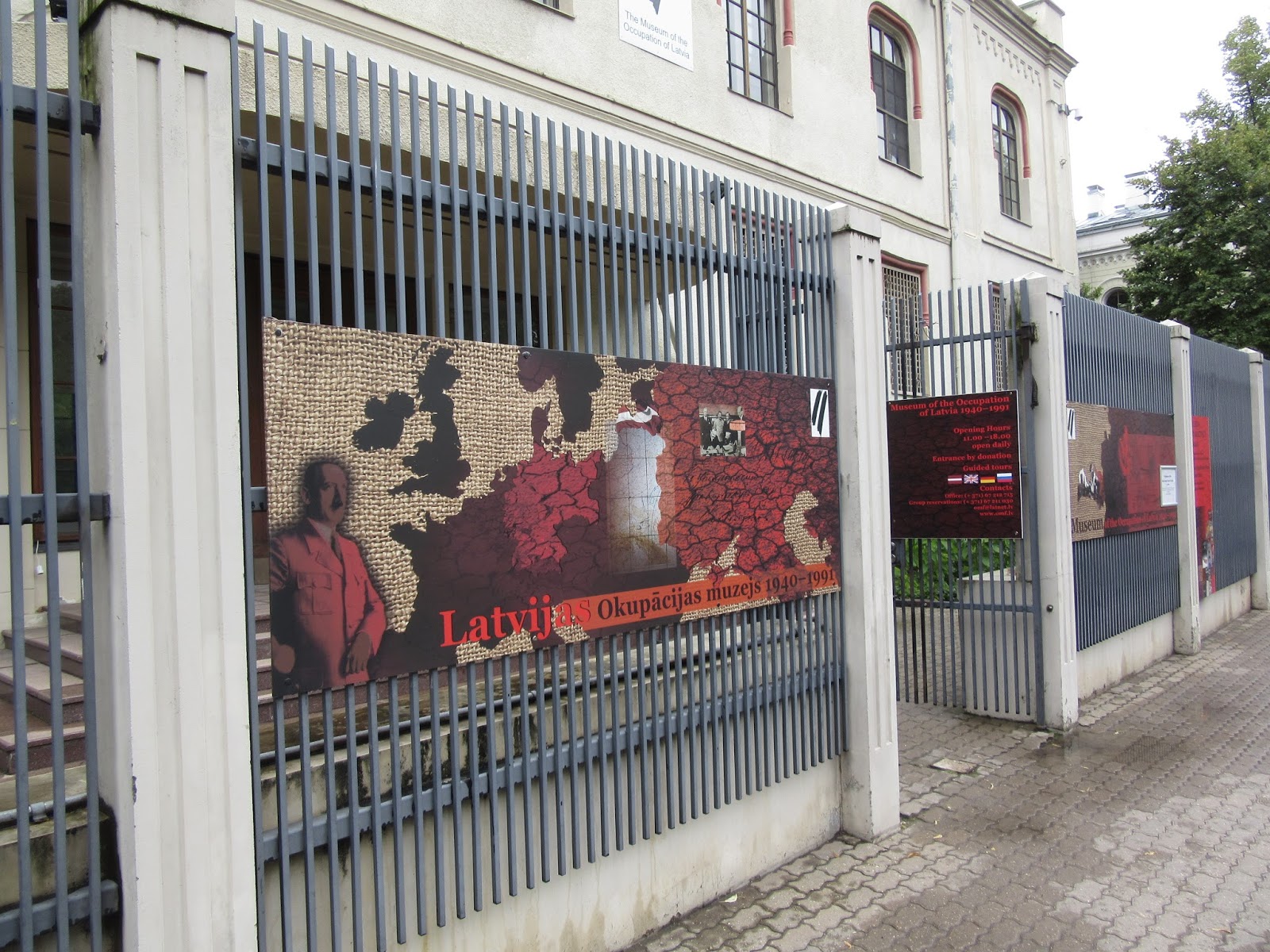
In the former US Embassy, is the temporary home of the Occupation
Museum. The guard inside joked it
was the safest museum in the city because of the barricades outside! The museum
retraces Latvia’s
plight under the German and Soviet occupations from 1940-1991. The moving
exhibits depict the life of Latvians deported to Siberia
and those who fought the Soviets in the forests.
Some Latvian history if you’re a nerdy wonk like me! If not,
skip ahead several paragraphs. Latvia
was a fully independent nation at the end of the Great War and was a member of
the League of Nations until 1940. The Hitler-Stalin Pact
of 1940 divided up Eastern Europe and, as a result, the USSR
formally annexed Latvia
in August of 1940.
Then Nazi Germany took over the country in 1941. They, of
course, had no plan to reestablish an independent Latvia.
70,000 Latvian Jews and 20,000 foreign Jews were murdered while the Germans
were in control. 200,000 Latvians were drafted into the German and Soviet
armies which resulted in Latvian fathers fighting against their Latvian sons
and brother against brother.
After the German capitulation in the summer of 1944, the Red
Army invaded Latvian territory that fall and resumed control of Latvia
once again. During the second occupation of Latvia
by the Russians in 1944-45, 150,000 Latvian protesters and sympathizers were
deported to distant parts of Russia
and 700,000 immigrants from other parts of the Soviet Union
were relocated to Latvia.
It is no wonder that the percentage of ethnic Latvians dropped from 75% of the
population in 1935 to only 52% in 1989. Latvians faced the threat of being a
minority in their own country.
Latvia
remained under the chokehold of the Soviet Union for the
next 46 years. Latvia
became the Latvian Soviet Socialist Republic within the USSR.
Soviet occupation authorities persecuted all resistance until the end of the
1980s – more than 47,000 Latvians were arrested and prosecuted. The largest
post WW11 Soviet terror action in Latvia
was the mass deportation of inhabitants in March of 1949 when 42,000 Latvians
were deported.
Figured we hadn’t had enough of our Russian fix by then so
walked over to the stunning, five golden domed Russian Orthodox Church aka
Nativity of Christ Cathedral. It had been gutted by the Soviets for use as a
planetarium and restaurant during their rule before being lovingly restored. It
was build from 1876 to 1884 for the city’s growing Russian community but became
a Lutheran church during the brief German occupation of Riga
in WW1.
What a sobering visit it had been to the Occupation Museum. That visit, combined with our time earlier in the day to the ghetto, might have been enough tragedy and angst for many tourists in one day but our journey through Latvian history continued.
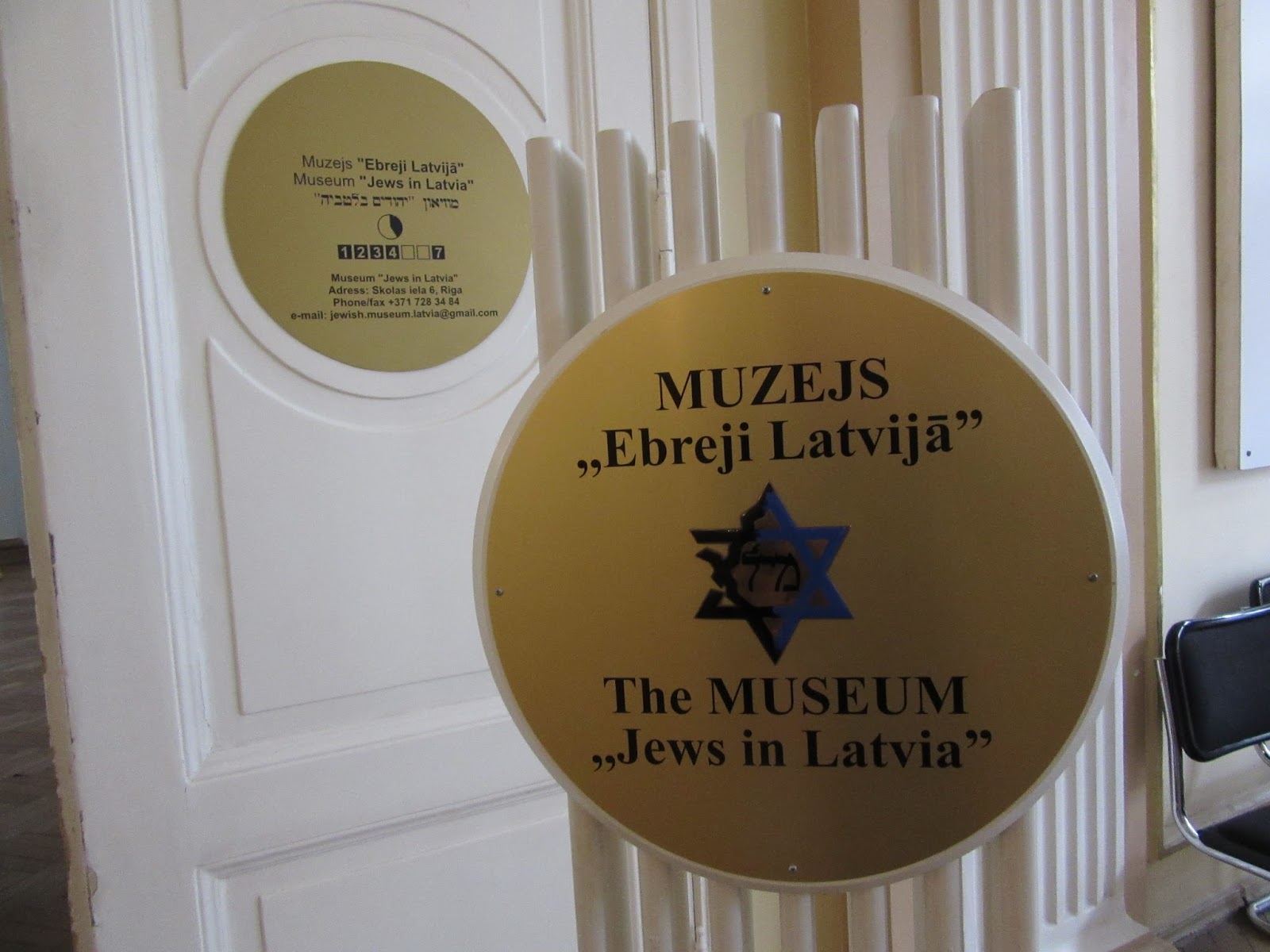
Hopping between puddles and trying to escape getting hopelessly wet from the intermittent rain that had threatened us since we had arrived in town a few days earlier, we went next to the Museum of Jews in Latvia housed in a historical building of the former Jewish theater. Because all Jewish-related buildings are under threat world wide, we had to get buzzed in. What a sad testament to the world we live in these days.
The small museum which was established in 1989 was dedicated to the achievements and history of Latvian Jewish history that began in the 16th century. It was moving to see the section dedicated to the rescue of Jews in Nazi-occupied Latvia.
Not sure what to make of the German funding for the exhibition.
We needed something more joyous at that point so we walked over
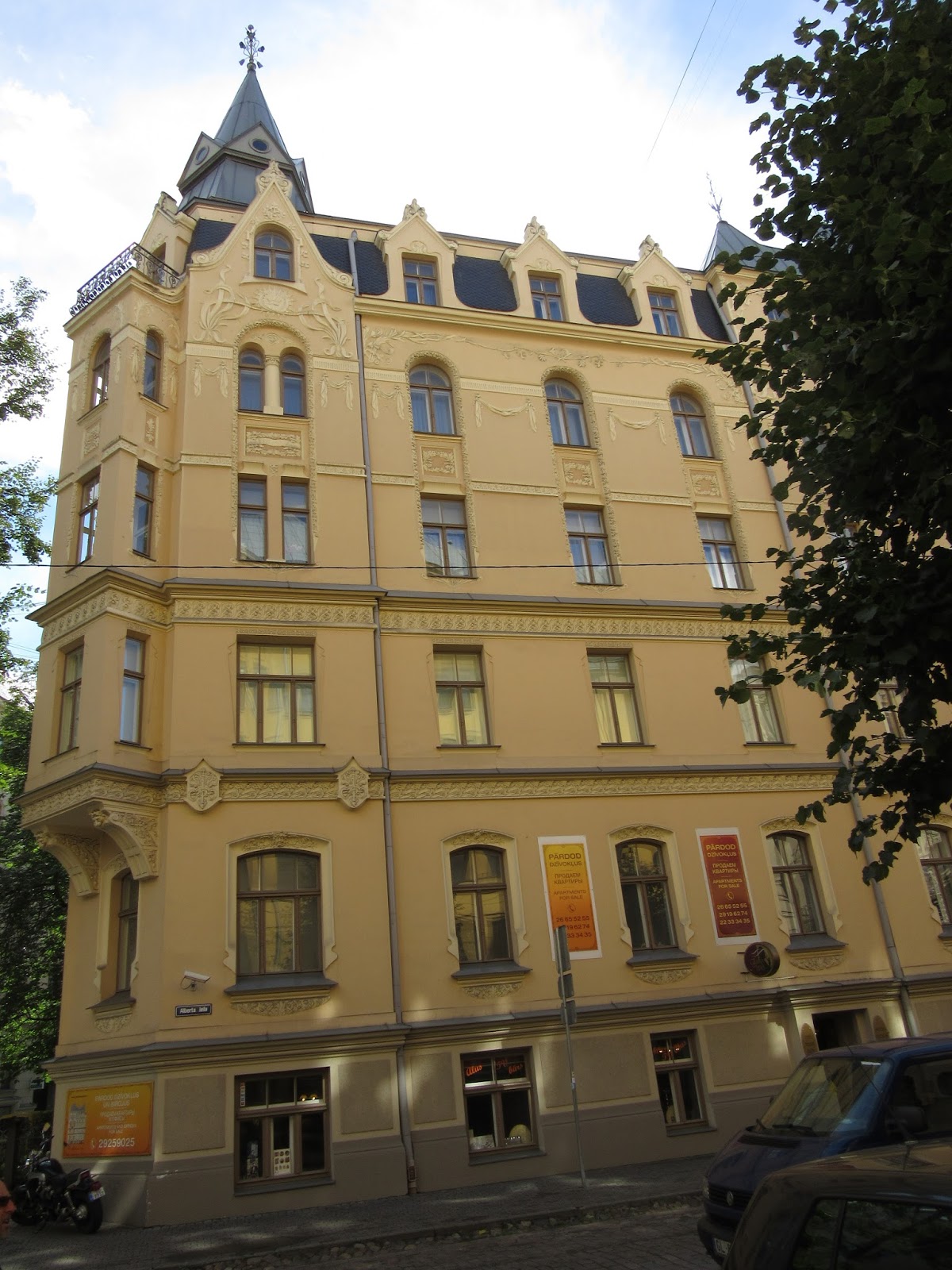
to the city’s Art Nouveau District as that style celebrated the triumph of the
bourgeoisie at the end of the 19th and beginning of the 20th century. A new wave
of architects jumped at the task of designing residential blocks, academies,
schools, department stores, libraries, banks, restaurants and factories. The
result is that nearly one in three buildings in Riga
– some 40% of the boulevard city that grew up in the 1900s – is in Art Nouveau.
The individual features of scores of these buildings, testaments to high-spirited urban living, made a walk around Riga a joy. We were but two people of many, many other tourists with cameras slung around their shoulders and necks craned upward looking at the magnificent details of one building right after another.
After a sobering day full of so much reflection on atrocities committed against our fellow man, it was gratifying spotting the beauty in art and flowers at the end of it.